>

About Me

Hey there! My name is Ritam. I grew up in the vibrant city of Kolkata in Eastern India. I pursued a BS-MS dual degree in Physics at the Indian Institute of Science Education and Research (IISER) Mohali. In 2024, I joined the Theoretical Evolutionary Ecology group led by Prof. Charles Mullon at the University of Lausanne.

I am fluent in English, Bengali, and Hindi. I also speak ein bisschen Deutsch and j'apprends le Français.

My passions lie in programming, mathematics, and biology. My journey began as a physics undergraduate, where I was fascinated by the mathematical modeling of collective behavior. A university course sparked my love for genetics and evolution, a subject that has captivated me ever since. Pursuing a PhD in evolutionary ecology allows me to continue my studies and delve deeper into what I love.

Curriculum Vitae

Things I Can Do

  • Python, Julia, Java
  • Deep Learning
  • Artificial Intelligence
  • Numerical Simulations

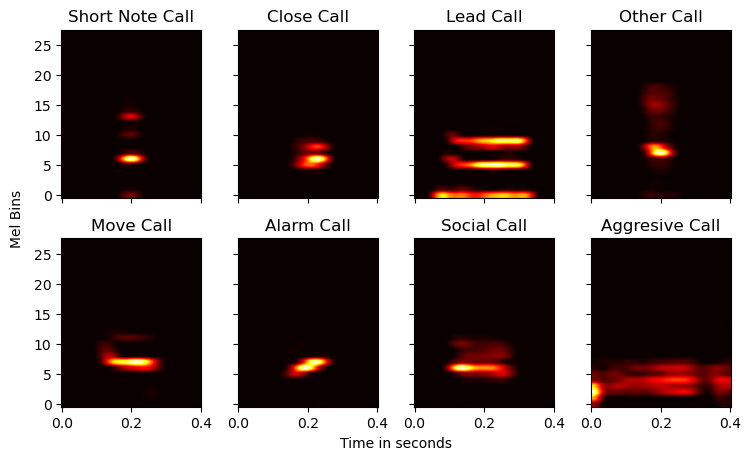
I have a passion for coding and simulations. My journey began with Java during my school years, but I now primarily use Python for my projects. Additionally, I am proficient in Julia. For my master's thesis, I delved into neural networks and deep learning, applying these techniques to the field of bioacoustics.

Other Stuff I Enjoy Doing

I'm a passionate football fan, equally at home, on the field and in front of the TV. Beyond the game, I find myself diving into football analytics and the fascinating math that drives it all. In my downtime, I unwind by creating generative art, inspired by Daniel Shiffman's "Nature of Code." Check out some of my eclectic creations here!

Education

University of Lausanne (UNIL)

PhD Student

2024 -

Indian Institute of Science Education and Research, Mohali

BS-MS Dual Degree (Physics)

2019-2024

WWA Cossipore English School, Kolkata

Indian School Certificate (ISC)

2005-2019

Research Projects

Bioacoustic Event Detection using Few-Shot Learning

Master's Thesis (June - December 2023)

Institute: Max Planck Institute of Animal Behavior (Konstanz, Germany)

Project Supervisor: Dr. Julian Schäfer-Zimmermann and Dr Ariana Strandburg-Peshkin

Bioacoustic research is critical for understanding biodiversity and animal communication, yet obtaining high-quality datasets is hindered by environmental variability and limited access. This study applies Prototypical Networks, a deep learning approach, to analyze meerkat vocalizations—a sparse and noisy dataset totaling nearly 200 hours. Building on the DCASE 2023 challenge framework, this research assesses the efficacy of Prototypical Networks in detecting bioacoustic events under challenging conditionsa and limited labels.

Epigenetic Modifications as spin-glass Systems

Summer Project (June - August 2022)

Institute: Max Planck Institute for the Physics of Complex Systems (Dresden, Germany)

Project Supervisor: Dr. Fabrizio Olmeda and Dr Steffen Rulands

Epigenetic modifications are found at various positions along our DNA, yet their distribution is non-random. The probability of an epigenetic modification occurring at a specific locus is influenced by neighboring modifications or the structural conformation of the folded DNA double helix. Our project involved modeling DNA as a one-dimensional lattice, with sites of epigenetic modifications represented as spins.

Other Projects

Machine Learning For Electronic Circuits

Project Supervisor: Dr. Sandeep Goyal

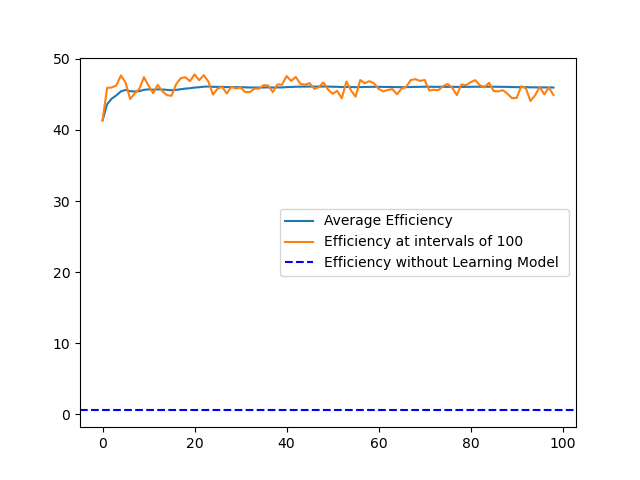
Used Projective Simulation algorithm to create an AI for designing electronic circuits. The algorithm actively learned to design circuits and come up with novel configurations that produce output of the desired waveforms.

Vicsek Model

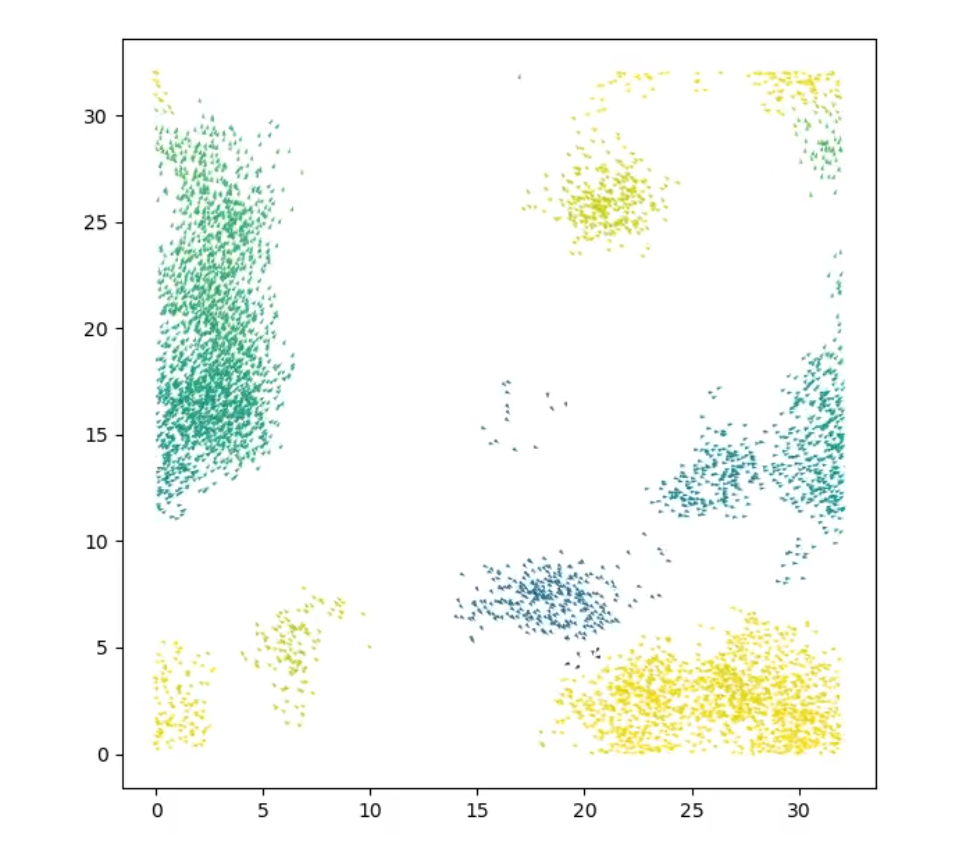
Coded for Vicsek's model of collective motion in self propelled particles using numpy in python